The Founder's Guide to MVP Development — Ship in 90 Days
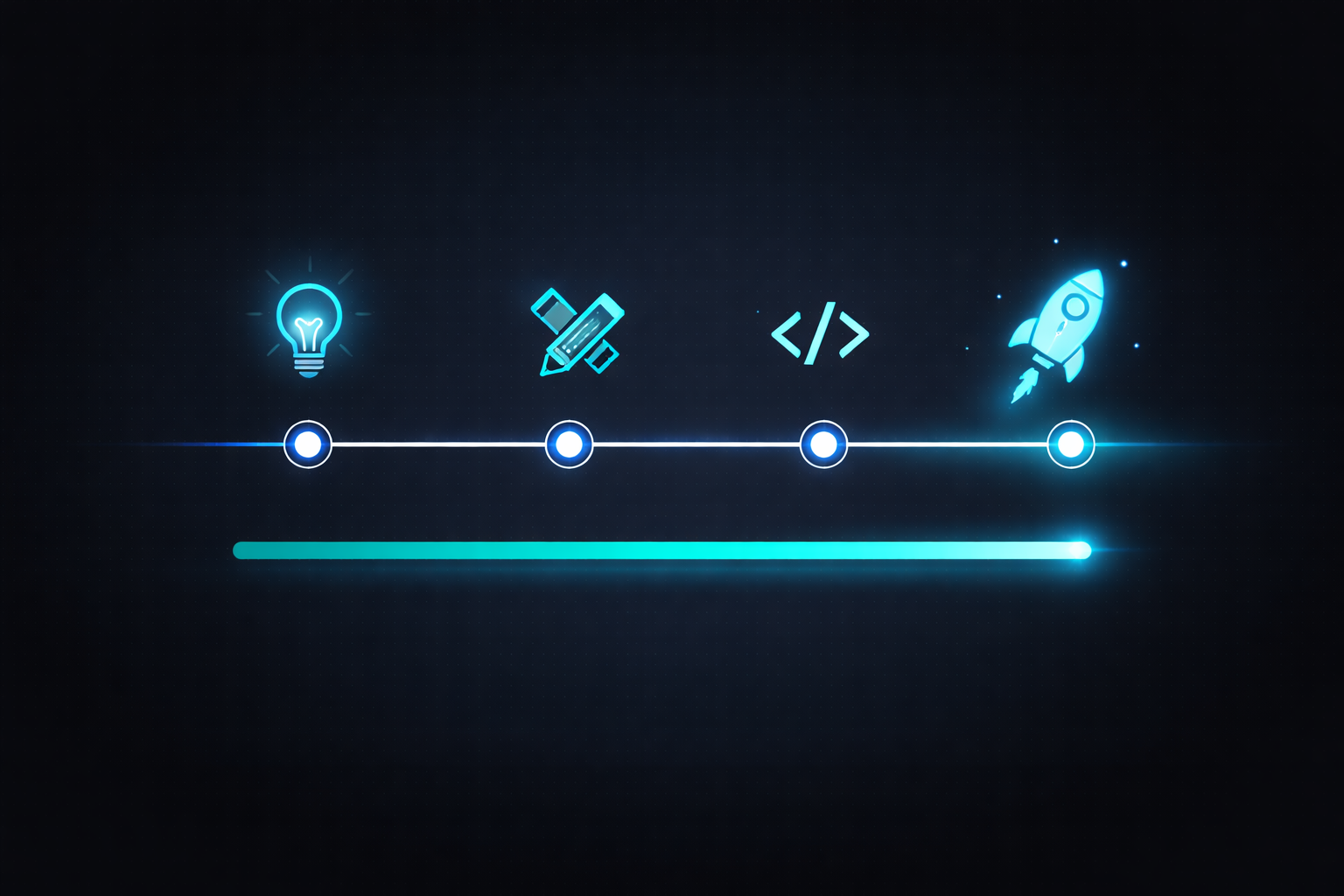
You've got an idea that won't leave your head. Maybe you've validated it with a few potential customers. Maybe you've even sketched out wireframes. The next step isn't building the perfect product — it's building the smallest possible version that proves your business hypothesis.
That's your MVP. And at SyntaxErreur, we help founders ship them in 90 days or less.
The goal of an MVP isn't to build a small product. It's to learn the maximum amount with the minimum investment.
What an MVP Actually Is (and Isn't)
An MVP is not a prototype. It's not a demo. It's not version 0.1 of your dream product with half the features missing. An MVP is a complete product that solves one core problem well enough for early adopters to pay for it.
The key word is "viable." If nobody would use it, it's not viable — it's just minimum. Your MVP needs to:
- Solve a real pain point for a specific user segment
- Work reliably (buggy MVPs don't validate anything)
- Be simple enough to build in weeks, not months
- Generate signal — signups, usage, feedback, or revenue
The 90-Day MVP Framework
Here's the exact timeline we use with founders at SyntaxErreur. It's aggressive but realistic — and it forces the hard prioritization decisions that make MVPs succeed.
Weeks 1-2: Scope & Strategy
Define the core job-to-be-done. Not 5 jobs. Not 3. One. What is the single most painful problem your target user faces, and how does your product solve it better than existing alternatives?
Write user stories, not feature lists. "As a sales manager, I need to see which leads are going cold so I can prioritize follow-ups" beats "dashboard with lead scoring."
Cut ruthlessly. For every feature, ask: "Would a user pay for the product without this?" If yes, cut it from v1.
Weeks 3-4: Design Sprint
User flows first. Map the critical path — the 3-5 screens a user must interact with to get value. Everything else is secondary.
Design system, not individual screens. Build a small component library (buttons, inputs, cards, navigation) that lets you assemble new screens fast in development.
Prototype and test. Put the clickable prototype in front of 5 target users. If they can't complete the core flow without guidance, redesign before you write code.
Weeks 5-10: Build
Choose boring technology. Next.js, PostgreSQL, Vercel. Your competitive advantage is not your tech stack — it's your product insight. Use proven tools that let you move fast.
Ship in 2-week sprints. Each sprint delivers a working increment. Week 5-6: auth + core data model. Week 7-8: primary feature flow. Week 9-10: billing + onboarding.
Deploy from day one. Your staging environment should be live from the first sprint. This catches integration issues early and gives stakeholders something real to review.
Weeks 11-12: Polish & Launch
Bug fixes, not new features. The last two weeks are for stability, not scope creep. Fix the rough edges that would embarrass you, ignore the ones that wouldn't.
Onboarding flow. If a new user can't get to their first "aha moment" in under 2 minutes, your onboarding needs work.
Launch to a small cohort. 20-50 users, not 2,000. You want concentrated feedback from people who match your ICP, not vanity metrics.
The 5 Most Common MVP Mistakes
1. Building for Everyone
Your MVP serves one user persona. Not two. Not "small businesses and enterprises." One segment, one problem, one solution. Expand after you've validated.
2. Over-Engineering the Architecture
You don't need microservices for 100 users. You don't need a custom event system. You don't need multi-region deployment. Build a monolith, ship fast, refactor when you have traction.
3. Skipping Design
"We'll make it pretty later" is how you end up with a product nobody wants to use. You don't need pixel-perfect designs, but you need clear, intuitive interfaces that don't confuse users.
You don't need microservices for 100 users. Build a monolith, ship fast, refactor when you have traction.
4. No Feedback Mechanism
If you launch and don't have a way to collect structured feedback — in-app surveys, usage analytics, scheduled user calls — you're flying blind.
5. Waiting for "Ready"
If you're not a little embarrassed by your MVP, you launched too late. The goal is learning, not perfection.
What Happens After Launch?
Your MVP launch isn't the finish line — it's the starting gun. The real work begins when real users interact with your product. Watch for:
- Activation rate: What percentage of signups complete the core action?
- Retention: Do users come back after day 1? Day 7? Day 30?
- Willingness to pay: Would users pay for this? Have you tested pricing?
- Feature requests: What are users asking for? (Often more revealing than what they say they want.)
Ready to Ship Your MVP?
The difference between a successful MVP and a failed one isn't talent or technology — it's focus. Focus on one problem, one user, one solution, and ship it fast enough to learn before your runway runs out.
At SyntaxErreur, we've helped founders go from idea to launched MVP in 90 days. We handle product strategy, design, and development so you can focus on your users and your market. Let's build.
Written by SyntaxErreur Team
We build AI-powered SaaS products for founders — from strategy and design to development and scale.
Related Posts
Ready to ship your MVP?
Book a free 30-minute strategy call and get a clear scope and timeline for your product.